
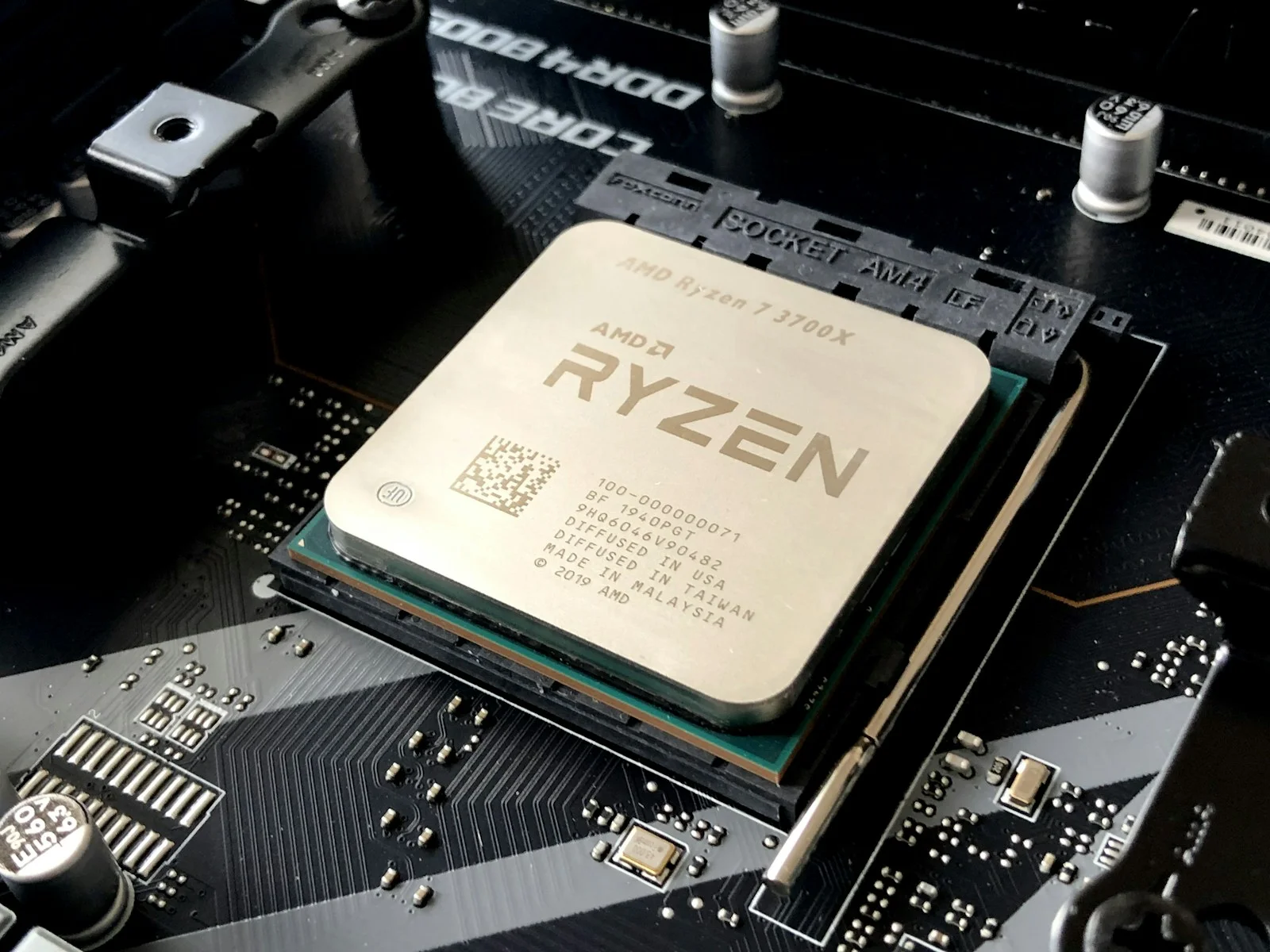
If you are responsible for provisioning physical server infrastructure in an enterprise colocation facility or preparing to repatriate virtualized workloads from AWS EC2, you know the absolute gravity of your CPU architecture selection. In the public cloud, choosing between an Intel-based c6i instance and an AMD-based c6a instance is a trivial drop-down menu decision that changes your hourly compute bill by a few pennies. But when you are purchasing $250,000 to $1,000,000 of enterprise server hardware to rack in a commercial colocation facility, that single choice locks your organization into a 3-to-5-year Total Cost of Ownership (TCO) trajectory.
In enterprise colocation, the purchase price of the server chassis and motherboards represents only a fraction of your long-term expenditure. The true financial driver—accounting for over 50% to 65% of your multi-year operational budget—is Colocation Power Density. Data center colocation operators do not bill you for rack space; they bill you for contracted electrical power, charging between $250 and $450 per kilowatt per month ($3,000 to $5,400 per kW/year). A rack of power-hungry, inefficient servers will burn through more money in electricity and cooling overhead than the hardware cost to buy them.
In 2026, the battle for data center server supremacy pits AMD EPYC (Zen 4 Genoa / Zen 5 Turin) against Intel Xeon (Emerald Rapids / Granite Rapids). For years, Intel held a near-monopoly on enterprise server rooms. But AMD’s radical chiplet architecture, massive core density (up to 128 cores per single socket), and superior power efficiency have fundamentally upended enterprise TCO economics. Let us conduct a forensic engineering teardown comparing AMD EPYC against Intel Xeon across real-world colocation power, rack consolidation, and capital amortization schedules.
- Colocation Power Density Tax: Colocation facilities bill $250 to $450 per kW/month. A 10kW colocation rack costs $30,000 to $54,000 annually purely for electrical power and HVAC cooling, dwarfing server depreciation.
- Socket Consolidation Advantage: A single-socket AMD EPYC 9654 (96 cores / 192 threads) replaces two dual-socket Intel Xeon 8480+ servers (56 cores each), cutting rack space by 50% and slashing per-socket enterprise software licensing fees.
- 3-Year TCO Savings: Deploying AMD EPYC over comparable Intel Xeon server clusters delivers 35% to 48% lower 3-year TCO, generating between $4,200 and $7,800 in total lifecycle savings per server node.
Which CPU Delivers Lower Total Cost of Ownership in Colocation?
AMD EPYC processors deliver 35% to 50% lower 3-year Total Cost of Ownership (TCO) compared to Intel Xeon in enterprise colocation environments. Because colocation costs are dominated by power density ($250 to $450 per kW/month), AMD’s higher core density (up to 128 cores per socket) enables a 2:1 server consolidation ratio, cutting physical rack space, power draw, and per-socket software licensing fees in half.
To understand why AMD EPYC dominates colocation economics, one must examine the mathematics of Server Consolidation and Thermal Dissipation. In modern enterprise colocation facilities (such as Equinix, Digital Realty, or CyrusOne), standard 42U server cabinets are strictly power-constrained. While a 42U rack can physically hold 42 one-rack-unit (1U) servers, a typical colocation power drop is limited to 5 kW to 10 kW per cabinet.
Consider a dual-socket Intel Xeon server running two Xeon Platinum 8480+ processors (112 cores total per chassis). Under peak production virtualization workloads, that 2U chassis draws an average of 750 to 850 watts from the PDU. In an 8 kW colocation cabinet, you can safely rack only 8 or 9 Intel servers before exhausting your contracted electrical power limit, leaving over 24 rack units of empty, wasted cabinet space.
In contrast, an AMD EPYC single-socket server running an EPYC 9754 (128 cores / 256 threads in a 1U chassis) draws approximately 400 to 450 watts under load. That single AMD server delivers more compute threads than the dual-socket Intel chassis while consuming nearly half the power. You can comfortably rack 16 AMD servers in that exact same 8 kW cabinet, effectively doubling your total computing capacity per colocation rack without triggering expensive high-density power upgrade surcharges.
The Silicon Architecture: Chiplet Density vs. Monolithic Packaging
The root cause of the massive TCO divergence between AMD EPYC and Intel Xeon lies in fundamental semiconductor manufacturing physics. Intel has historically relied on large, monolithic silicon dies for its Xeon processors. Fabricating a monolithic 56-core or 64-core processor die requires flawless silicon across a massive surface area. In semiconductor fabrication, die defect rates scale exponentially with surface area, resulting in lower manufacturing yields and drastically higher per-chip production costs.
In contrast, AMD pioneered the Modular Multi-Chiplet Architecture. An AMD EPYC processor (such as the 9654 or 9754) is composed of up to 12 or 16 tiny Core Complex Dies (CCDs) fabricated on an advanced 5nm/4nm process node, interconnected via a centralized 6nm I/O Die (IOD) using AMD Infinity Fabric. Because each CCD is small, silicon yields are near-perfect, allowing AMD to pack up to 128 physical Zen 4c cores into a single socket at a fraction of Intel’s manufacturing cost. This architectural distinction translates directly into superior enterprise economics:
- NUMA Configuration Mastery (NPS Settings): AMD EPYC provides configurable NUMA Nodes Per Socket (NPS). For general-purpose virtualization and container workloads, setting NPS1 presents the entire socket as a unified memory pool with zero cross-socket scheduling penalties. For high-performance database workloads (such as PostgreSQL or ScyllaDB), configuring NPS4 aligns each quadrant of CPU cores with its local 3-channel DDR5 memory controller, slashing memory access latency to under 85 nanoseconds.
- PCIe Gen5 Lane Density: Every single-socket AMD EPYC processor provides 128 PCIe 5.0 lanes directly from the CPU. This enables enterprise colocation builds to connect 24 direct-attached NVMe SSDs and dual 100GbE Mellanox ConnectX-6 NICs with zero bottlenecking and zero requirement for expensive secondary CPU sockets.
Colocation Thermal Management and PDU Circuit Protection
In a commercial colocation facility, electrical branch circuits are governed by the 80% continuous load rule under the National Electrical Code (NEC). A standard 30A / 208V single-phase circuit drop is rated for a continuous maximum load of 24 amps (approximately 4,990 watts). When racking Intel dual-socket servers, instantaneous computational bursts can trigger current spikes that trip upstream PDU circuit breakers, causing localized rack blackouts. AMD EPYC processors support precise Configurable Thermal Design Power (cTDP) in the server BIOS, allowing system administrators to cap power consumption at exact wattage thresholds (e.g., 280W or 320W) to guarantee that server clusters never exceed contracted colocation circuit limits under any workload condition.
Forensic Comparison: AMD EPYC vs. Intel Xeon Colocation TCO
Review the comprehensive 3-year financial model comparing an infrastructure footprint of 1,000 compute cores running on AMD EPYC versus Intel Xeon in a tier-3 enterprise colocation facility:
| TCO Financial Parameter | Intel Xeon Cluster (8480+ Dual) | AMD EPYC Cluster (9654 Single) | Forensic Audit & TCO Variance |
|---|---|---|---|
| Target Compute Workload | 1,000 Production Cores | 1,000 Production Cores | Identical compute parity |
| Physical Server Node Count | 9 Dual-Socket Servers (18 CPUs) | 11 Single-Socket Servers (11 CPUs) | 40% fewer CPU sockets |
| Upfront Hardware CAPEX | $198,000 ($22k per 2U chassis) | $143,000 ($13k per 1U chassis) | $55,000 initial CAPEX savings |
| Average Continuous Power Draw | 7.2 kW continuous load | 4.4 kW continuous load | 39% lower electrical power |
| 3-Year Colocation Power Cost ($300/kW) | $77,760 ($2,160/mo) | $47,520 ($1,320/mo) | $30,240 saved in colocation fees |
| Per-Socket Enterprise Licensing (3-Yr) | $108,000 (18 sockets @ $6k) | $66,000 (11 sockets @ $6k) | $42,000 licensing savings |
| Total 3-Year TCO | $383,760 | $256,520 | $127,240 Net TCO Savings (33.2%) |
Bare-Metal Migration & Production Rollout Checklist
To optimize your colocation server procurement and capture maximum TCO efficiency with AMD EPYC today, follow this verified four-step sequence:
- Default to Single-Socket Architectures Over Dual-Socket Builds: Modern AMD EPYC processors support up to 128 physical cores and 128 PCIe 5.0 lanes from a single CPU socket. Do not pay for dual-socket motherboards, redundant heatsinks, and second-socket CPU licenses unless your specific workload requires more than 1.5TB of RAM in a single node. A single-socket 1U server minimizes hardware failure points and slashes power consumption.
- Standardize on DDR5-4800 / DDR5-5600 1DPC Memory Layout: AMD EPYC Zen 4/5 architectures feature 12 memory channels. To achieve full 460 GB/s memory bandwidth, populate all 12 memory channels with one Dual-Inline Memory Module (DIMM) per channel (1DPC). Running in unbalanced configurations (such as 4 or 8 DIMMs) throttles memory throughput by up to 40% and cripples database performance.
- Audit Your Colocation Contract Power Density & PUE: Request an audit of your colocation agreement. If your facility charges on a metered kWh model with an efficient Power Usage Effectiveness (PUE < 1.25), AMD EPYC's low idle power draw will yield immediate monthly credits. If your contract is fixed-kW, resize your contracted circuit drops to match AMD's lower thermal envelope.
- Leverage KVM / Proxmox VE to Eradicate Per-Core Hypervisor Fees: Pair AMD EPYC servers with open-source enterprise virtualization (Proxmox VE or Linux KVM). Broadcom’s VMware licensing changes now penalize high core-count CPUs by capping licenses at 32 cores per socket. Utilizing Proxmox VE or bare-metal Kubernetes (Talos Linux) eliminates hypervisor licensing costs entirely, allowing you to maximize AMD’s 128-core density with zero software penalties.
Frequently Asked Questions: AMD EPYC vs. Intel Xeon in Colocation
Are Intel Xeon processors better for specific AI or enterprise workloads?
Intel Xeon processors feature built-in hardware accelerators, including Intel Advanced Matrix Extensions (AMX) and QuickAssist Technology (QAT). For enterprise organizations running INT8 or BF16 deep learning inference models directly on general-purpose CPUs without dedicated NVIDIA GPUs, Intel AMX provides substantial throughput gains. However, for 90% of general data center workloads—including Kubernetes microservices, relational databases (PostgreSQL/MySQL), high-cardinality time-series, and web serving—AMD EPYC’s higher raw core count, larger L3 cache (up to 384MB+ with 3D V-Cache), and memory bandwidth deliver superior performance per dollar.
Do single-socket AMD EPYC servers provide enough PCIe lanes for NVMe storage?
Yes. A single-socket AMD EPYC 9004 series CPU exposes 128 PCIe 5.0 lanes directly from the processor socket. This provides ample bandwidth to drive up to 24 U.2/U.3 direct-attach NVMe solid-state drives alongside dual 100GbE or 200GbE network interface cards (NICs) without requiring expensive PCIe switches or secondary processor sockets.
What is AMD 3D V-Cache (EPYC 9084X) and which workloads justify the cost?
AMD 3D V-Cache technology stacks additional SRAM vertically on top of the processor’s Core Complex Dies, expanding total L3 cache to an astonishing 1,152 megabytes (over 1.1GB) per socket. For cache-sensitive enterprise workloads—such as high-frequency electronic trading systems, large-scale Electronic Design Automation (EDA), fluid dynamic simulations, and in-memory analytical databases—3D V-Cache keeps vast working datasets resident on-die, eliminating memory bus latency and delivering up to 2.5x higher throughput compared to standard server processors.
How does AMD EPYC power efficiency impact data center cooling costs?
In data center thermodynamics, every watt of electrical power consumed by a server CPU is converted directly into heat that must be extracted by the facility’s Computer Room Air Handler (CRAH) units. A typical colocation facility operates with a PUE (Power Usage Effectiveness) between 1.3 and 1.6. By consuming 39% less power than comparable Intel dual-socket configurations, an AMD EPYC cluster drastically reduces facility cooling overhead, preventing localized rack hotspots and thermal throttling during summer peak utility pricing.
In enterprise colocation, server hardware procurement cannot be evaluated in isolation from data center thermodynamics. When you account for the relentless monthly cost of power density and per-socket software licensing, AMD EPYC single-socket server architecture is the undisputed champion of data center TCO. For any organization planning a bare-metal deployment or cloud repatriation initiative, standardizing on AMD EPYC delivers 35% lower multi-year costs while doubling computing density per rack.