
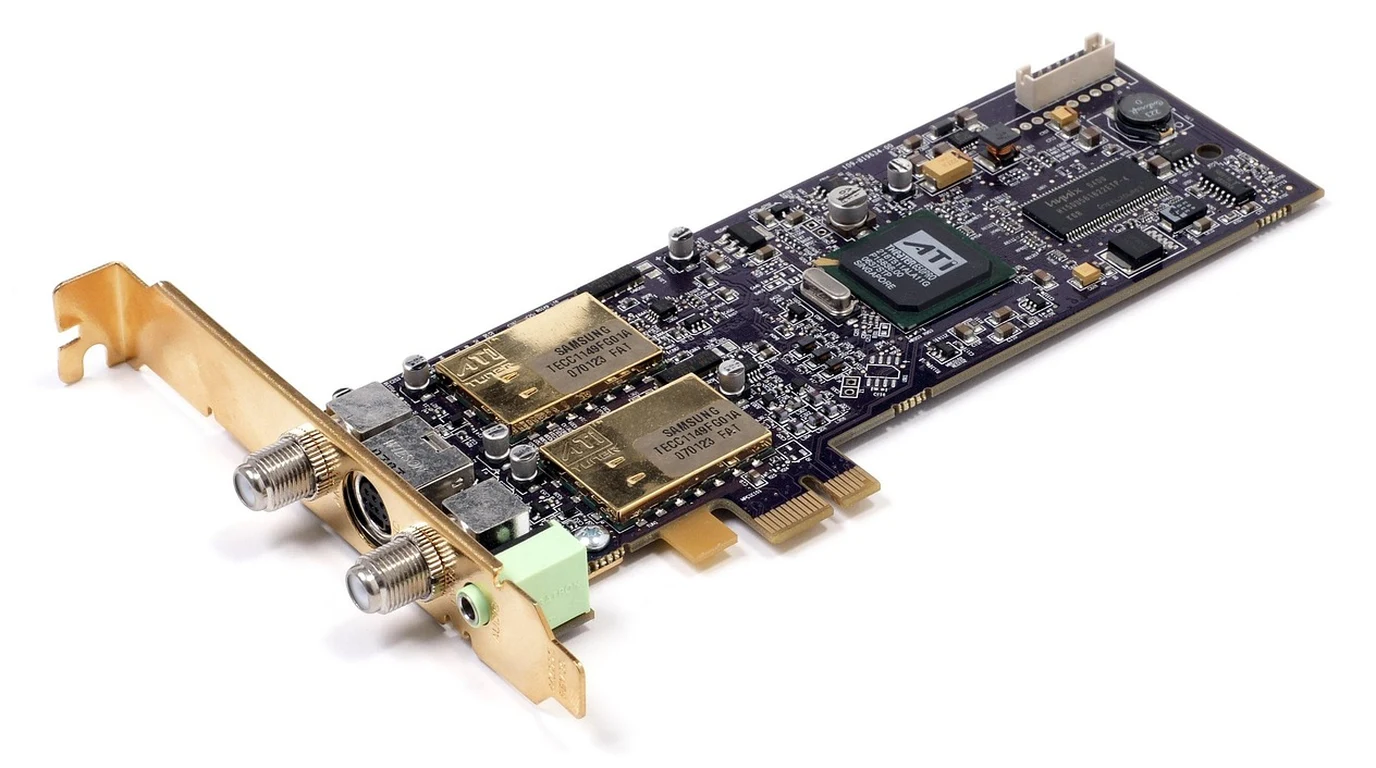
- Hyperscaler Architectural Advantage: AWS Nitro architecture uses custom ASIC accelerators to offload networking (VPC encapsulation), storage (EBS NVMe emulation), and hypervisor management, preserving 100% of host CPU cycles for customer compute.
- The Bare-Metal CPU Penalty: In traditional self-hosted colocation, running Open vSwitch, Cilium eBPF, WireGuard encryption, and Ceph NVMe-oF initiators on host CPUs consumes 20% to 30% of total socket capacity.
- The BlueField-3 Repatriation Solution: Deploying NVIDIA BlueField-3 DPUs offloads Linux kernel networking, NVMe-over-Fabrics storage, and zero-trust firewalls onto 16 on-card ARM Cortex-A78 cores, unlocking full hyperscaler parity in private data centers.
The Hidden CPU Tax in Traditional Bare-Metal Deployments
When engineering organizations embark on cloud repatriation, their financial models invariably focus on raw compute comparisons. They calculate that renting an m6i.16xlarge instance in AWS costs $3.072 per hour ($26,910 per year), whereas leasing or purchasing a dual-socket AMD EPYC server with 128 cores and 512GB of ECC DDR5 RAM costs less than $600 per month amortized across three years.
However, when those repatriated workloads land on unassisted bare metal, systems architects often discover an unexpected performance discrepancy: their host CPUs are running hotter and delivering lower application throughput per core than anticipated. When they profile the Linux kernel using perf or htop, they discover that 15 to 25 of their 64 cores per socket are permanently pinned handling softirqs, iptables connection tracking, VXLAN encapsulation, WireGuard packet encryption, and Ceph NVMe-over-Fabrics (NVMe-oF) storage traffic.
This is the “Infrastructure Tax.” In public cloud environments, you never see this overhead because AWS engineered the Nitro System—a proprietary array of dedicated hardware cards that offload all hypervisor routines, VPC networking, EBS storage emulation, and cryptographic boundary enforcement onto custom ASICs. Your rented EC2 instance receives pristine, unencumbered x86 cores.
To achieve true architectural parity with hyperscalers in private data centers and colocation racks, enterprise engineering teams are turning to Data Processing Units (DPUs), led by the NVIDIA BlueField-3. By installing a BlueField-3 DPU into a standard PCIe Gen 5 slot, you effectively insert an independent, high-performance computer inside your host server dedicated entirely to running the infrastructure plane.
The Costly Trap & Nuance Comparison Matrix
Let us examine the forensic hardware architecture and operational throughput differences between unaccelerated bare metal, AWS Nitro offload, and NVIDIA BlueField-3 DPU acceleration across a 100-node enterprise compute fabric.
| Architectural Dimension | Unassisted Bare Metal (Standard NIC) | AWS Nitro Architecture | NVIDIA BlueField-3 DPU |
|---|---|---|---|
| Host CPU Infrastructure Overhead | 20% – 30% lost to kernel networking & storage | 0% (Offloaded to proprietary Nitro chips) | 0% – 2% (Offloaded to 16 ARM A78 cores) |
| Network Throughput & Latency | Kernel bottlenecked (~25M pps, 15µs latency) | 100Gbps ENA (~40M pps, 12µs latency) | 400Gbps line rate (Up to 400M pps, <3µs latency) |
| Storage Offload (NVMe-oF / RoCE) | Host CPU handles SPDK / kernel initiator | Hardware EBS controller emulation | Hardware NVMe-oF SNAP target emulation |
| Zero-Trust Microsegmentation | Host iptables / eBPF (Vulnerable if root compromised) | Nitro VPC Security Groups (Isolated) | Hardware isolated DOCA firewall on DPU |
| Software Stack Flexibility | 100% open Linux kernel | 100% closed, proprietary AWS black box | Open DOCA / Linux on ARM (Full control) |
| Annualized Cost per Node | $3,600 (Wasted CPU cores amortized) | $26,910 (Cloud instance rental markup) | $850 (BlueField-3 card amortized over 4 yrs) |
When you analyze the financial equation across a 100-node cluster, the numbers are striking. If an enterprise deploys unassisted bare-metal servers costing $12,000 each, losing 25% of the host CPU to infrastructure overhead is the economic equivalent of throwing away $300,000 worth of compute capacity. By equipping those nodes with $3,400 BlueField-3 DPUs, you recover all that compute while accelerating networking throughput by up to 10x.
The Technical Architecture of NVIDIA BlueField-3
A modern DPU is not merely a fast network interface card with offload engines; it is an autonomous server-on-a-card. The NVIDIA BlueField-3 integrates three critical compute complexes onto a single piece of silicon:
- The ARM Compute Subsystem: Sixteen 64-bit ARM Cortex-A78 cores running at 2.2GHz with 32GB of dedicated onboard LPDDR5 ECC memory. This subsystem runs its own complete Ubuntu Linux operating system completely segregated from the host operating system. Even if a hostile actor executes an exploit granting root access to the host server, they cannot modify the networking, firewall rules, or storage mounts enforced by the DPU.
- The ConnectX-7 Network Controller: Hardware line-rate engines delivering up to 400Gbps of bidirectional bandwidth, supporting dual QSFP112 ports, RoCEv2 (RDMA over Converged Ethernet), hardware GPUDirect RDMA, and programmable pipeline acceleration.
- The DOCA Programmable Acceleration Core: Dedicated cryptographic accelerators executing hardware IPsec, MACsec, TLS, and NVMe-over-Fabrics SNAP emulation. When configured with SNAP, the DPU presents physical NVMe block devices directly to the host PCIe bus. As far as the host operating system is concerned, it is reading and writing to an ultra-fast local NVMe SSD, but under the hood, the DPU is seamlessly translating those reads and writes into RoCEv2 packets destined for a remote Ceph storage cluster.
The 4:00 PM Actionable Implementation Playbook
If you are designing high-density colocation infrastructure or preparing a high-throughput workload for repatriation, here is how to introduce DPUs into your bare-metal server fleet:
- Select DPU Form Factor and PCIe Generation: Ensure your server chassis supports PCIe Gen 5 x16 slots with adequate auxiliary power (75W–150W depending on optics). For high-density 1U/2U servers, the BlueField-3 DPU is available in standard PCIe FHHL (Full-Height Half-Length) form factors.
- Initialize the DPU Embedded OS: Connect to the DPU via the dedicated out-of-band 1GbE management port. Flash the onboard eMMC or NVMe with the latest NVIDIA DOCA Linux image:
# From your provisioning management network
ssh [email protected]
cat /etc/os-release
doca-version
mst status -v
- Configure Hardware OVS & eBPF Offload: Instead of executing Open vSwitch or Cilium eBPF on your host AMD EPYC cores, configure the Open vSwitch hardware offload daemon directly on the DPU ARM cores. Packets traversing the overlay VXLAN fabric are switched directly in ConnectX-7 silicon without waking the host kernel.
- Mount Distributed Block Storage via NVMe SNAP: Configure the BlueField-3 storage virtualization engine to connect to your central Ceph NVMe-oF cluster via RoCEv2. Emulate local NVMe controllers so the host sees zero-latency block devices, freeing your host OS from running heavyweight storage drivers.
- Lock Down the Host Separation Plane: Isolate management access so that host administrators cannot access the DPU console. You have now established an impenetrable, hardware-enforced security boundary identical to AWS Nitro, but under your absolute institutional sovereignty.
Hyperscalers gained a decade-long performance edge by offloading their hypervisors and virtual networking to custom silicon. DPUs democratize that exact competitive advantage for private infrastructure. By relieving your expensive x86 cores of packet-shuffling drudgery, you reclaim 25% of your compute budget and elevate network throughput into the terabit realm.
Frequently Asked Questions
A SmartNIC typically features fixed-function hardware acceleration (such as checksum offload or basic packet filtering) and limited programmability. A DPU integrates a multi-core general-purpose CPU (such as 16 ARM Cortex cores) running a full Linux OS, dedicated DDR memory, and programmable hardware engines capable of hosting autonomous storage, security, and networking control planes.
Yes. Popular open-source CNIs including Cilium, Calico, and OVN-Kubernetes feature native hardware offload integration for NVIDIA DPUs via DOCA and Linux kernel TC flower offloads, shifting pod-to-pod routing and security policies entirely onto the DPU silicon.
While standard 100GbE or 400GbE switches work for basic Ethernet traffic, taking full advantage of RDMA storage offload (RoCEv2) requires switches supporting Priority Flow Control (PFC) and Explicit Congestion Notification (ECN) to guarantee lossless packet transmission.