
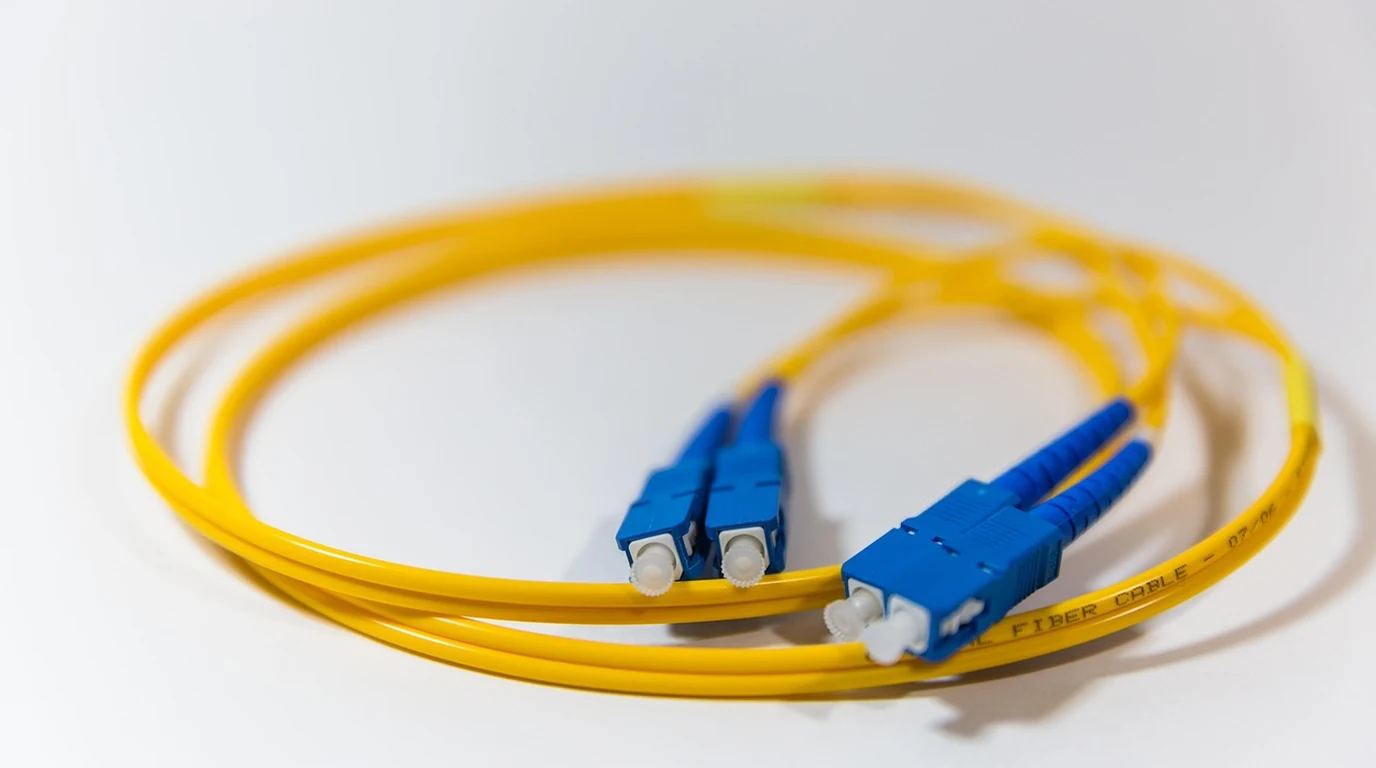
You’re sitting in your office, staring at a line item on your monthly colocation invoice that feels like a typographical error. It’s not the power draw, which you expected to be high, and it’s not the square footage of your cage. It’s the “Cross-Connect” fees. You see twenty or thirty entries, each billing between $300 and $650 per month. You know, as well as I do, that a two-meter strand of LC-to-LC single-mode fiber costs about $20 to manufacture and maybe $5 to ship. Yet, here you are, paying the price of a mid-range sedan every single month for the privilege of having that yellow string pass through a hole in a wall to a Meet-Me Room (MMR).
It feels like a shakedown because, in a purely economic sense, it is. When you sign a lease with a Tier-1 provider like Equinix or Digital Realty, you aren’t just buying floor space and cooling; you are buying access to an ecosystem. The landlord knows that once your gear is racked and your traffic is flowing, the cost of moving—the “egress friction”—is so high that they can charge a 2,000% markup on a passive piece of glass. This is the “Cross-Connect Tax,” and if you don’t have a FinOps strategy specifically for your physical layer, it will quietly eat your infrastructure budget alive.
*Assumes a single physical cross-connect fee to a provider who accepts DWDM handoffs.
The table above illustrates a terrifying reality: a single DWDM multiplexer can save a company nearly a quarter-million dollars over the life of a standard datacenter lease. If you are paying for 20 individual cross-connects, you aren’t just paying for connectivity; you are subsidizing the landlord’s next acquisition.
Direct Practical Verdict:
To eliminate cross-connect sprawl, you must transition from a 1:1 physical-to-logical port model to a multiplexed architecture using DWDM optics. By consolidating multiple 10G or 100G handoffs onto a single fiber pair and negotiating fixed-rate caps or “all-you-can-eat” bundles during initial lease signing, you can reduce recurring connectivity OpEx by 70% or more.
Why am I paying $400 a month for a $20 fiber patch cable?
To solve the problem, we have to understand the monopoly mechanics at play. In a standard enterprise datacenter, the Meet-Me Room is the holy of holies. It is the centralized hub where every carrier—Verizon, AT&T, Lumen—and every cloud on-ramp terminates their fiber. When you want to connect your cage to a carrier, the datacenter provider runs a fiber from your patch panel, through the overhead cable trays, into the MMR, and onto the carrier’s patch panel. The labor takes about thirty minutes. The material cost is negligible. But the “Monthly Recurring Charge” (MRC) is where the provider makes their highest margin. Unlike power, which has a fluctuating cost of goods sold (COGS), or space, which has a finite ceiling, a cross-connect is a “set it and forget it” revenue stream with near-zero maintenance. The industry giants have built their entire valuation on these recurring fees. If you have 50 cross-connects at $400 each, you are paying $240,000 a year for what is essentially a static physical map. The trap most engineers fall into is treating cross-connects as a utility—like water or electricity—rather than a negotiable, architecturally optimizable asset. We need to stop thinking about “cables” and start thinking about “wavelengths.”How much do cross-connects actually cost over a five-year lease?
Most procurement teams look at the Non-Recurring Charge (NRC)—the $500 to $1,000 installation fee—and try to negotiate that down. That is a rookie mistake. The NRC is a distraction. The real financial damage is done by the MRC over a 60-month term. Let’s look at the math of “sprawl.” If you are a growing enterprise adding five cross-connects a year to support new partners or carriers, your “passive” fiber bill becomes a dominant line item.| Connection Strategy | Monthly Cost (Avg) | 1-Year Total | 5-Year TCO | Efficiency Rating |
|---|---|---|---|---|
| 10x Standard Fiber Pairs | $4,000 | $48,000 | $240,000 | Poor (1:1 Ratio) |
| 20x Standard Fiber Pairs | $8,000 | $96,000 | $480,000 | Critical Waste |
| DWDM Mux (40 Channels) | $400* | $4,800 | $24,000 | Elite (40:1 Ratio) |
| Shared Carrier Aggregation | $1,200 | $14,400 | $72,000 | High Efficiency |
Can I use DWDM to bypass cross-connect fees in a colocation facility?
The short answer is: Yes, but you have to be clever about where the “Mux” sits. Dense Wavelength Division Multiplexing (DWDM) allows you to send multiple signals (wavelengths) over a single pair of fiber. In a standard setup, if you need four 10G connections to a specific partner or carrier, you pay for four cross-connects. With DWDM, you install a passive Mux/Demux in your rack and one in the partner’s rack. You then pay for one physical cross-connect between the two cages. The challenge is that many carriers won’t let you put your hardware in their cage, and the datacenter provider won’t let you put your hardware in the MMR. This is where the Carrier Aggregation Rack strategy comes in. Instead of running individual lines to every carrier, you negotiate a “backbone” of high-capacity fiber pairs to a neutral aggregation point or a partner who is willing to “mux-down” the handoff. Even better, if you have two separate cages in the same facility (perhaps for compliance or different business units), never, ever run individual links between them. Use a single pair and mux everything—storage, management, and data—onto that one piece of glass.What are the best negotiation strategies for datacenter cross-connect contracts?
The moment you sign the lease, your leverage drops to zero. The “Golden Hour” for FinOps is during the initial RFP and lease negotiation. Here is how you should approach the contract to prevent cross-connect bleeding: 1. The “All-You-Can-Eat” Bundle: For larger footprints (10+ racks), negotiate a flat monthly fee for a set number of cross-connects (e.g., “First 50 cross-connects included in the base rent”). This forces the landlord to treat connectivity as a feature, not a profit center. 2. The Annual Increase Cap: Most contracts have an “escalator” clause (usually 3-5%). Ensure this cap applies to cross-connect MRCs specifically. Without this, a $300 cross-connect today can easily become a $450 cross-connect by the end of a five-year term. 3. The NRC Waiver: Always demand a 100% waiver on Non-Recurring Charges for the first 90 days of the lease. This allows you to build out your initial topology without getting hit with $10,000 in “installation” fees. 4. Bulk Pricing Tiers: If you can’t get a bundle, negotiate tiered pricing. For example: Cross-connects 1-20 are $350, 21-50 are $250, and 51+ are $150. 5. Audit Rights: Ensure your contract allows you to decommission cross-connects with a 30-day notice and a corresponding reduction in the bill. Some predatory contracts try to “lock in” the cross-connect count for the duration of the term.How do I audit my existing cross-connect inventory for waste?
If you are already mid-lease and your bill is bloated, you need to perform a “Physical-to-Logical Audit.” It is a tedious process, but it’s the only way to find the “Ghost Cross-Connects.” I’ve seen environments where 15% of the billed cross-connects were plugged into ports that were “Admin Down” or, worse, plugged into nothing at all. This happens because the decommissioning process in most enterprises is broken. An engineer pulls a decommissioned server, but they forget to submit the ticket to the datacenter provider to “de-install” the cross-connect. The provider will happily keep billing you for that dark fiber for the next three years. Every quarter, export your cross-connect list from the provider’s portal (e.g., Equinix Fabric or DLR’s portal) and cross-reference it with your switch LLDP neighbors. If a cross-connect doesn’t have an active neighbor and isn’t part of a documented disaster recovery path, kill it.The 4:00 PM Resolution: Your Actionable Playbook
If you want to fix this today, follow these five steps. Don’t wait for the next budget cycle; the “tax” is accruing every hour. 1. Identify the “Top 3” Sinks: Look at your bill and find the three entities you have the most physical links to. Is it an ISP? A cloud on-ramp? A sister company? These are your targets for DWDM muxing. 2. Deploy Passive Muxes: Purchase a pair of 8-channel or 16-channel passive DWDM Mux/Demux units. These require no power and have a MTBF (Mean Time Between Failure) of decades. They are the most reliable way to consolidate fiber. 3. Standardize on DWDM Optics: Stop buying standard 1310nm optics for your long-range datacenter links. Start buying tunable DWDM optics. They cost more upfront, but they give you the flexibility to “tune” a port to a specific mux channel without changing hardware. 4. Consolidate and Cancel: Once your muxes are in place, migrate your traffic from the individual fiber pairs to the muxed channels. Once the traffic is verified, submit the “De-install” orders immediately. Do not wait for the end of the month. 5. Redline the Next Lease: Take your findings to your procurement team. Show them the 5-year TCO of the current sprawl and give them the specific redline language: *”Tenant shall have the right to multiplex signals over any cross-connect, and Landlord shall not charge additional fees based on the number of logical signals or wavelengths utilized.”* Datacenter landlords are in the business of selling “convenience” at a massive premium. By applying a FinOps mindset to your physical layer, you stop being a passive consumer of their ecosystem and start being an architect of your own bottom line. The glass is cheap; the strategy is where the value lives.Frequently Asked Questions
What is the difference between a cross-connect and an interconnect? In a colocation context, a cross-connect is a physical layer-1 connection between two customers or a customer and a carrier within the same datacenter. An interconnect is a broader term often referring to layer-2 or layer-3 virtual connections (like an Ethernet exchange) that may span multiple buildings or regions. Can I run my own fiber between my rack and a neighbor’s rack to avoid fees? Generally, no. Datacenter Master Service Agreements (MSAs) strictly prohibit “crossover” cabling between cages that bypasses the overhead cable trays or the MMR. Doing so is usually a breach of contract and a fire code violation. You must use the landlord’s managed fiber system. Is DWDM reliable for mission-critical datacenter links? Yes. Passive DWDM is arguably more reliable than standard optics because it eliminates active components between the switches. As long as your optical power budget (link loss) is calculated correctly to account for the insertion loss of the Mux, it is a gold-standard carrier-grade solution.
Datacenter Colocation Cross-Connects & Fiber Network FinOps
Observability metric ingestion costs often mirror hidden cloud networking fees. For analyzing physical datacenter transit and cross-connect costs, read our guide on AWS CloudWatch Pricing Traps: Custom Metrics Slashing.