
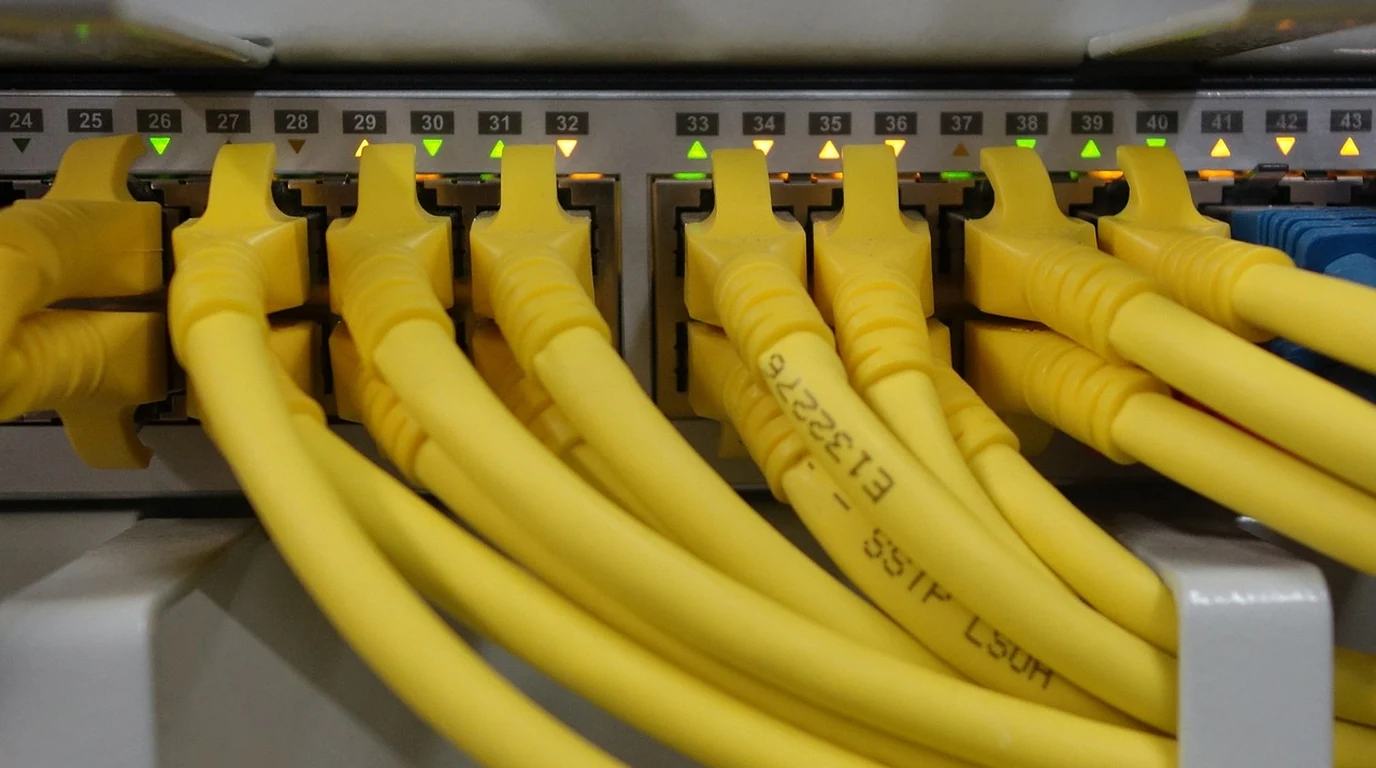
In traditional enterprise networking, data center infrastructure procurement has long been dominated by a proprietary duopoly: Arista Networks (EOS) and Cisco Systems (Nexus NX-OS). When an infrastructure team builds out an on-premises colocation facility or high-speed Kubernetes spine-leaf fabric, the networking quote often triggers intense executive sticker shock. A pair of 32-port 100GbE leaf switches and two 64-port spine switches can easily exceed $180,000 once proprietary optics, mandatory annual software maintenance contracts, and advanced feature license keys are factored into the invoice.
Yet, if you physically disassemble an Arista 7050X3 or a Cisco Nexus 9300 switch, the hardware revelation is striking: both devices are powered by the exact same commercial silicon. At the physical heart of the switch sits a merchant silicon ASIC—almost universally manufactured by Broadcom (Tomahawk or Trident families)—paired with an off-the-shelf x86 CPU board and power supplies. You are paying an extraordinary 400% hardware markup and recurring annual support taxes purely for the proprietary operating system installed on the flash drive.
Over the past four years, the hyperscale cloud providers (spearheaded by Microsoft, Meta, and Alibaba) dismantled this proprietary racket by creating and open-sourcing SONiC (Software for Open Networking in the Cloud). Built on a containerized Linux architecture and the Open Compute Project’s Switch Abstraction Interface (SAI), SONiC runs natively on bare-metal whitebox switches from manufacturers like Edgecore, Celestica, and Delta. This forensic analysis audits the engineering stability, operational ergonomics, and massive cost savings of deploying SONiC in enterprise colocation environments.
What Is SONiC NOS and How Does It Compare to Arista and Cisco?
- The Proprietary License Toll: Arista EOS and Cisco NX-OS charge $450 to $600 per 100GbE port, backed by mandatory recurring SmartNet/A-Care software subscriptions that expire every 12 months.
- Whitebox Disaggregation: Pairing open-source SONiC with Edgecore or Celestica whitebox switches powered by Broadcom Tomahawk 3 ASICs delivers identical line-rate 100GbE/400GbE performance for $85 to $110 per port.
- Validated FinOps ROI: Slashes spine-leaf networking capital expenditure by 68% while eliminating all recurring software licensing fees across the 5-year hardware lifecycle.
The core architectural breakthrough of SONiC is the Switch Abstraction Interface (SAI). Historically, every networking vendor wrote proprietary microcode to interface directly with ASIC hardware registers, permanently locking customers to their specific operating system. The Open Compute Project’s SAI established a standardized C-language API that abstracts the underlying switching silicon. Whether a switch runs a Broadcom Tomahawk, an Innovium Teralynx, or an Intel Tofino ASIC, SONiC speaks to the hardware through a universal driver layer.
Proprietary Networking vs SONiC Whitebox Matrix
The comparative matrix below deconstructs the hardware costs, licensing structures, and operational realities across a standard 4-switch (2 Spines, 2 Leafs) 100GbE data center fabric:
| Architectural Dimension | Arista Networks (EOS) | Cisco Systems (Nexus) | SONiC on Whitebox (Edgecore) |
|---|---|---|---|
| Hardware Switch CapEx (32x 100GbE) | $18,500 per switch | $21,000 per switch | $5,800 per switch |
| OS & Advanced Feature Licensing | A-Care + FLX License ($4,200/yr) | SmartNet + DCN License ($5,100/yr) | $0 (Open-Source Apache 2.0 / Debian) |
| Third-Party Transceiver Policy | Soft warnings; requires CLI override | Error-disables ports on non-Cisco optics | 100% Unlocked; accepts any FS.com optic |
| Operating System Architecture | Modified Linux with SysDB state agent | NX-OS Linux container architecture | Containerized microservices via Docker |
| 5-Year Total Fabric TCO (4 Switches) | $158,000 | $186,000 | $31,200 (80.2% Net Savings) |
EVPN-VXLAN Multi-Tenancy: Enterprise Routing on Whitebox
In modern multi-tenant enterprise data centers, workloads must be isolated into distinct security zones without spanning legacy Layer-2 broadcast domains across physical switches. Proprietary networking vendors charge tens of thousands of dollars for ‘Advanced Data Center Licenses’ to enable BGP EVPN (Ethernet VPN) with VXLAN (Virtual Extensible LAN) encapsulation.
In SONiC, BGP EVPN-VXLAN is a first-class, built-in feature powered by FRRouting (FRR), the premier open-source IP routing protocol suite. FRR runs as an isolated, containerized daemon directly inside SONiC:
- Type-2 MAC/IP Route Distribution: As containers and virtual machines spin up across different physical compute nodes, SONiC automatically advertises host MAC and IP bindings via BGP to all spine and leaf switches.
- Type-5 IP Prefix Routing: Enables high-speed inter-subnet routing directly on the leaf switches (symmetric IRB), eliminating bottlenecks at centralized gateway firewalls.
- Hardware-Accelerated VXLAN VTEPs: Packet encapsulation and decapsulation occur directly inside the Broadcom Tomahawk ASIC pipeline at full line rate, achieving 100Gbps throughput with zero CPU packet forwarding penalty.
By standardizing on open-source EVPN-VXLAN in SONiC, infrastructure teams build an infinitely scalable, non-blocking Clos fabric that matches the architecture of AWS and Azure, entirely free of vendor software licensing taxes.
The Costly Trap: The Vendor Lock-In Optic Ransom
In enterprise networking, the dirty secret of hardware pricing is that switch chassis are merely loss leaders designed to hook customers on high-margin proprietary optics and cables. When you purchase an Arista or Cisco switch, the vendor requires you to purchase their branded 100G QSFP28 optical transceivers. A single branded 100G-SR4 transceiver from Cisco carries a list price of roughly $1,200.
If you insert an identical, high-quality generic optical transceiver from third-party manufacturers like FS.com (which costs roughly $89), Cisco Nexus switches will automatically disable the port with an ERR-DISABLE: Unapproved Transceiver error unless secret engineering commands (service unsupported-transceiver) are injected. Furthermore, if you encounter an intermittent packet drop issue months later, vendor technical support will frequently refuse to investigate your ticket until you reproduce the issue using genuine $1,200 vendor optics.
With SONiC whitebox switches, the transceiver subsystem is completely open. The switch reads standard EEPROM SFF-8472 telemetry without vendor discrimination. In a modest 32-port switch fully populated with 100GbE connections, avoiding proprietary optics saves an immediate $35,500 in cabling CapEx per switch.
Bare-Metal Migration & Production Rollout Checklist
If your systems engineering team is architecting a bare-metal spine-leaf fabric this quarter, execute this deployment blueprint:
- Select ONIE-Compliant Hardware: Ensure your whitebox switch features the Open Network Install Environment (ONIE) bootloader. ONIE acts as an open-standards network installer that boots over DHCP/TFTP and installs any compliant network OS automatically.
- Standardize on Broadcom Tomahawk 3/4 Silicon: Choose whitebox models with Broadcom Tomahawk ASICs (such as the Edgecore DCS203 or Celestica Seastone DX010). Broadcom silicon maintains the highest stability and deepest driver support within the open-source SONiC repository.
- Automate Network Configurations via Ansible / gNMI: Because SONiC is a native Debian Linux system running Docker containers, you configure the switch using standard modern DevOps tools. Use Ansible or gNMI (gRPC Network Management Interface) to push BGP EVPN and VLAN configurations directly into the switch’s central Redis state database.
- Run Enterprise SONiC Distributions for Support: If your executive leadership demands enterprise warranty backing, procure commercially supported SONiC distributions from vendors like Broadcom Enterprise SONiC or Aviz Networks. You retain 100% whitebox hardware independence while securing 24/7 Tier-3 engineering escalation support at a fraction of Cisco’s cost.
Proprietary network operating systems are the last bastion of legacy enterprise hardware gouging. Just as Linux conquered proprietary Unix servers (Solaris and AIX) twenty years ago, SONiC and whitebox switching are rapidly commoditizing the data center network fabric. Forward-thinking infrastructure architects who embrace open networking dismantle vendor lock-in, streamline CI/CD automation, and slash networking budgets by over 70%.
Once your carrier-neutral edge BGP routing daemon is selected, integrate your upstream transit into low-latency 100GbE spine-leaf switching architectures:
Read the Complete Architecture Guide: BGP Multihoming for Colocation: Bird vs FRRouting Guide →